This post will spoil the first 32 seconds of Silent Hill f
This post will spoil the first 32 seconds of Silent Hill f.
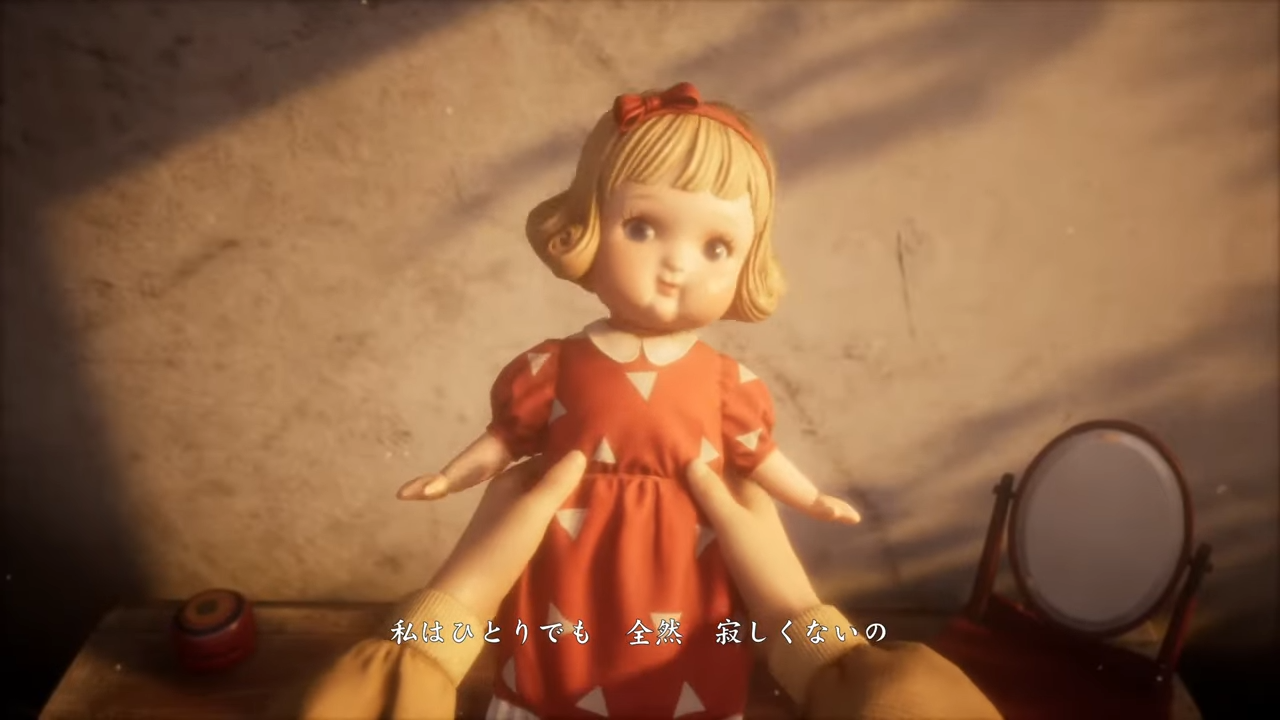
The first 32 seconds of Silent Hill f hooked me faster than it took to read this sentence.
It's a barebones presentation. Here's the setup: the (assumed) protagonist is playing with a doll in what's framed as a childhood flashback. We’re seeing the scene through her own eyes as she laments being isolated from the other girls in her class because of her willingness to play with the boys — your average gender cliquiness, everything normal, everything nominal, so far so backstory. You're almost tempted to wonder if this long and static monologue was also a way to save on budget – the entire game does have a "we recycled as hard as we could because funds were minimal" vibe to it, and it's present since the very first moments.
All of this is presented in a very understated way. There's nothing else but the doll and your – and eventually your sister's – voice, just the quiet reflection of a child on the cusp of teenagehood who's having a hard time crossing that threshold and abandoning the world she knew behind. She wonders why people get weird when she keeps playing with boys, she's just airing thoughts that while rare in gaming, have been explored plenty of times in plenty of media.
Until the cut.
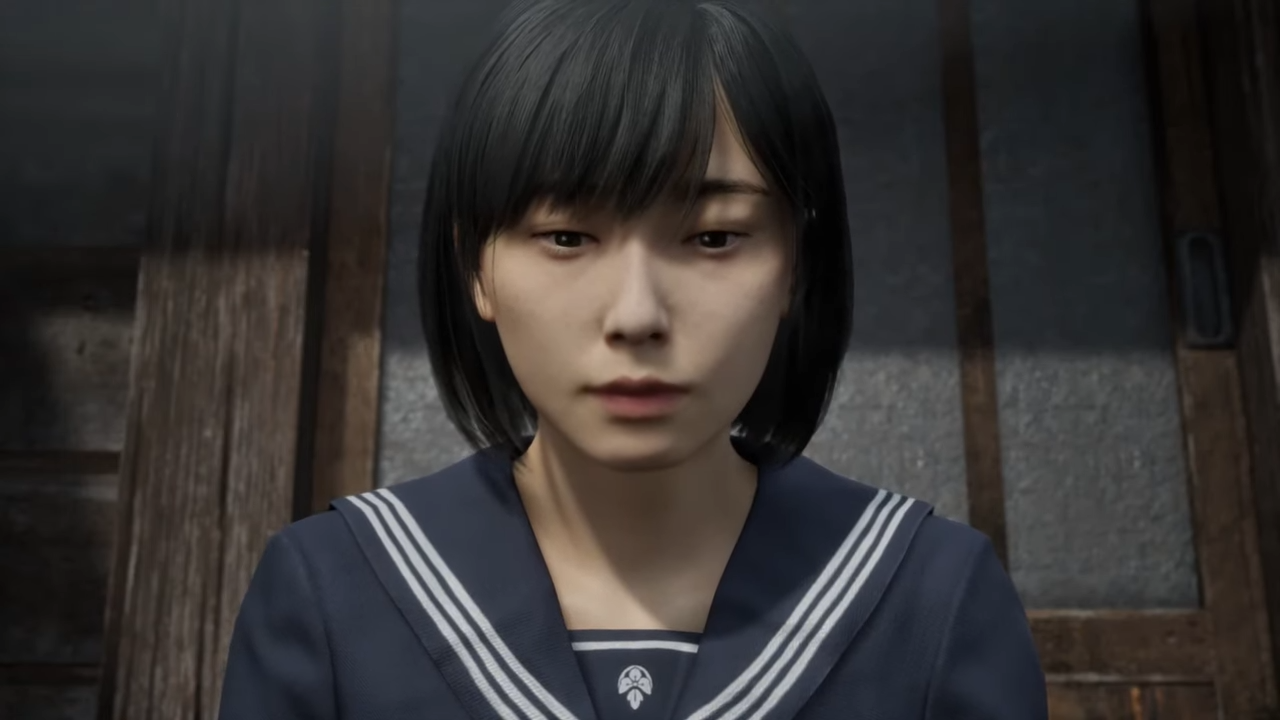
It’s a brutal cut. Underscored by no change in music or ambiance, it’s as clear a statement as you can make in the language of cinema. Years have passed between the two moments, and whatever went down afterward in her adolescence is having a deep effect on her modern day self – a self now staring the beginning of the end of her teenage years right in the face. All those years, we only experience through the lingering consequences they left on her face. There's no stinger, no transition. Just the concept and the consequence. It's brilliant.
I was immediately left with one question: what is it trying to say?
And then with a second question: how does this relate to Silent Hill 2?
Every Silent Hill game is made in the shadow of Silent Hill 2; every Silent Hill game is an attempt at recapturing Silent Hill 2. Every Silent Hill game must loudly declare itself to be either in artistic continuity with or in artistic opposition to Silent Hill 2, the apex of the horror genre according to many — me included. And every audience member will be using this highest of bars to compare a Silent Hill game against. Hence, that’s my take, the cut.

What’s the very thing that happens in Silent Hill 2? Before the walk down the mountain path, before the car, before even realizing you’re in a bathroom. James Sunderland looks at himself in the mirror, his face engulfed in shadows, eyes impossible to make out. A powerful declaratory statement, whose true message will only be revealed by the end of the game, but a message nonetheless. You can tell the use of shadows means something here.
There's no such artifice in Silent Hill f. No movement, no symbolic gestures, no powerful use of chiaroscuro to paint our protagonist. It’s bland to the point of incompetence, almost; just a frontal close up, no particular lighting, no particular mood. It’s just her, face inexpressive, looking at her life. And that’s what the game is about.
This is a personal story, even more than SH2 was. The town? That’s your town this time — not a random stop on the highway, not a foggily remembered holiday destination, your own town. Your own house, your own school, your own very tiny circle of friends, your own memories of childhood opening a story that deals with yes, trauma – all Silent Hill games have to deal with trauma in some form... or do they? It's different this time. You, Hinako, already know, and have known for years, every single character you meet in this story.
It's a very weird atmosphere, one that took me a full third of a playthrough to get used to, but once you're able to take the story how it wants to be taken, then you see what it's going for.

A separation that's at times jarringly mechanical, of course (the game features a stamina bar, a focus gauge, a sanity meter, a shop, a perks system...), but in storytelling, this seems to be the answer. Silent Hill 2 stripped bare, its layers of cultural distance-influenced abstraction and Lynch-inspired artifice removed, taking root inside a deeply, deeply Japanese identity, the camera not a brush used to pant over reality but a simple observer. Maybe it's the budget, but this intentionally reductionist approach… it’s doing it for me. It’s having me fully absorbed.
The mostly flat cinematography takes on a whole different meaning, with a story half told through diary entries — your own — about a town you already know, that you’ve lived in for all your teenager life. Silent hill not as the unknown you venture into but the normal, distorted and corrupted, sure, but mostly normal. A town that was decaying and collapsing even before the events of the story took place, but a town you already spent your whole life in. Detached, almost dissociated, brutal in its mundanity. It goes places. And frankly, it goes there beautifully.
AND YOU DIDN’T NEED SOULSLIKE COMBAT TO DO ALL THIS SHI—